Introduction
With the rapid development of digital electronic technology and the internet, especially during the current boom in video games, adults are beginning to worry about the negative impacts of children’s early exposure to electronic products. As a result, tabletop puzzle games are constantly being updated and iterated, ushering in a period of rapid growth.
Matching games, as one such example, have seized this opportunity and secured a place in the field of children’s education.
What Are Match Up Games?
Match Up Games are puzzles games where you match cards or elements based in the games rules. Its history can be traced back to card matching games played by European nobles in the 19th century and mortise and tenon splicing games in ancient my country. However, at that time, they were mostly used foe entertainment and not for children’s education. With the development of technology and education, match up games have gradually transformed from casual board games into educational games, and the gameplay has become increasingly diverse, with both offline and online matching games available.
The following are some of the most popular match up games:
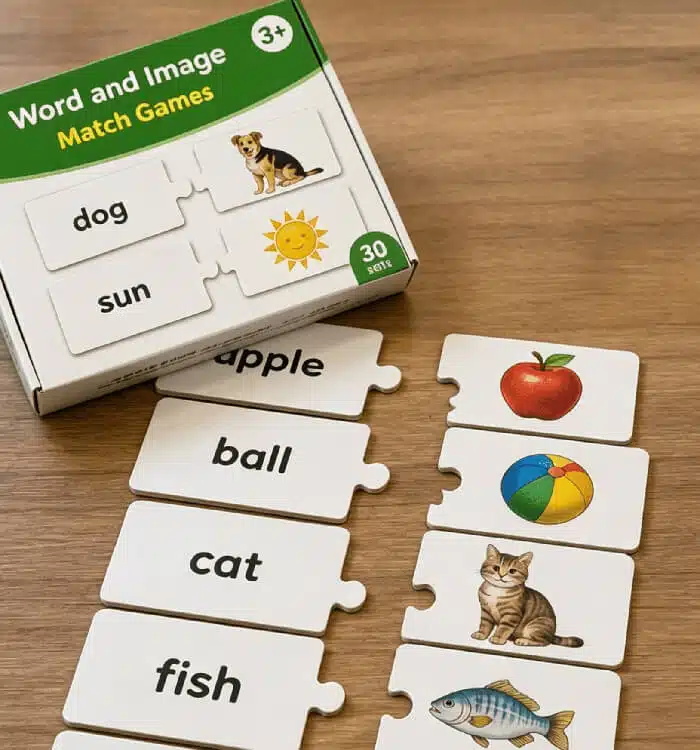
Word & Picture Matching
Alphabet Matching
Number Matching
Shape Matching
Why Are Match Up Games So Effective for Learning?
Improve Memory: Children need to recognize images quickly, and even match images with text, which to some extent trains their short-term memory.
Developing Concentration: When recognizing images, children need to concentrate and remember as much content as possible, which helps develop visual concentration.
Language Development: Word-image match games help children better remember and understand words by establishing connections between them.
Develop Logical Thinking: By playing matching games with different themes, children can learn logical induction and develop logical thinking skills.
How Match Up Games Have Evolved Over Time
Traditional Card Matching Games (Pre–19th Century)
Card matching games in medieval Europe and early graphic matching games in my country were mostly handmade.
Early Childhood Education Matching Games (19th Century–1990s)
With the emergence of education systems, educational toys for matching games began to appear. Simultaneously, due to the development of education in an industrialized economy, matching cards continuously gained popularity as a tool for children’s early learning.
Online or Offline Matching Games (2000-2019)
The development of the internet and smart technology has diversified matching games into online and offline tracks. Online, children can engage in matching games anytime, while offline physical educational toys are constantly being updated and iterated, becoming increasingly refined, with different materials, target audiences, and themes.
Interactive Learning Tools (2020–Present)
With the development of the digital economy, parents are increasingly concerned about about their children’s eyesight and are avoiding the use of electronic products. At this time, matching games have re-emerged, focusing more on early education and being designed to incorporate various teaching knowledge, becoming more systematic.
Where Are Match Up Games Commonly Used?
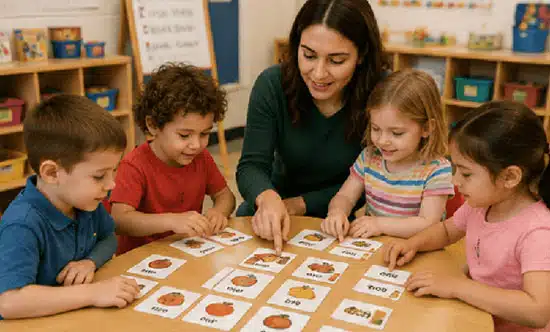
Preschools
The most common area. The matching games used in this area are very basic, mainly involving matching fruits and animals, matching English letters, etc., to help children develop their intelligence.
Family Education
Actually, the application of matching games in family education is similar to the previous area, but with some differences. This emphasizes parent-child interaction and parental involvement; parents can use it to teach children some basic life skills.
Learning Centers
Here, it’s called a matching educational toy, combining games with various teaching knowledge, allowing teachers to systematically teach students these concepts.
Toy Retail
Primarily used for leisure and entertainment, suitable for children to play with friends, enhancing interaction and bonding.
Common Challenges When Developing Match Up Games
Difficulty in Matching Age Groups
Children of different ages and from different countries have different cognitive levels and comprehension abilities. Matching games that are too difficult or too easy will make children to lose interest, making it difficult to unified standard.
Design Difficult Points
Matching games need to balance education and fun, but achieving this balance is challenging. Too much educational knowledge will bore children, while too much fun will not meet educational needs. It is very difficult.
Differences in Safety Standards
This type of games is widely used by children, so the materials must meet child safety standards. However, toy safety standards vary across countries and regions and requiring different certifications increase upfront costs significantly.
Supply Difficult Points
Matching games typically feature multiple images, with each card having a unique design. This increases printing difficulty and costs, and color variations occur easily during printing.
Future Opportunities in the Match Up Games Market
Eco-Friendly Educational Toys
The implementation of plastic bans has led to a significant trend towards the use of environmentally friendly materials in matching games. Simultaneously, the increasing emphasis on green consumption abroad has boosted demand for highly eco-friendly product.
Multilingual Learning Games
With the flourishing of international exchange, cross-cultural and cross-linguistic learning is receiving increasing attention. Parents in various countries countries and regions are starting to cultivate their children’s multilingual learning abilities from a young age.
Theme Learning Products
There are typically popular due to holiday themes, such as Christmas and Halloween. Children can learn while experiencing the atmosphere of these festivals, achieving the best of both worlds.
Customized Learning Games
Matching game sets can be customized based on course content and learning progress. Collaborations with major brands can also help expand the consumer market.
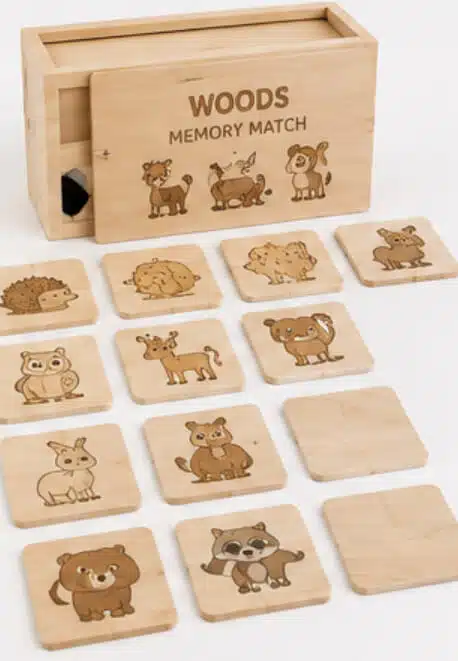
Advice for Product Buyers
Safe
Product safety is the first consideration. Materials must meet the relevant safety standards. For products targeting younger children, some measures, such as rounded corners cutting, are necessary to avoid potential safety hazards.
Age
Children from different ages and learning environments have various levels of knowledge. For kindergartens and early education school, the focus should be on introductory courses and simple matching games, such as color or pattern match up games.
Education Meaning
The most important thing of matching games is to balance education and fun. Products with multiple ways to play are preferable. And the educational knowledge must be suitable for the relevant customer group. These can be used not only for matching games but also for sorting, role-playing, etc., improving product cost performance.
Conclusion
Match Up Games are a kind of puzzle games combining fun and education for kids, having these benefits such as improving memory, focus, language skills and logical thinking. They continue to develop driven by trends towards environmental friendliness, multilingualism, and customization. If you need help to develop Match Up Games for your target market, working with an experienced manufacturer Jabay can help you to design a perfect product.
FAQs
1. What are Match Up Games?
Match Up Games are puzzles games where you match cards or elements based on the games rules.
2. What age group are Match Up Games suitable for?
Match Up Games are designed for children aged 2-8 years, but the specific difficulty level can be adjusted to meet other age groups.
3. What skills can children develop through Match Up Games?
These games help improve memory and concentration, visual recognition, language skills, and logical thinking skills.
4. What are the most popular themes in Match Up Games?
The popular themes include Word & Picture, Alphabet, Number, Shape and so on.
5. Can I custom Match Up Games?
Yes. You can custom on sizes, shapes, packaging, educational content, languages, and other things according to your requirements.
6. What materials are used for Match Up Games?
Cardboard, laminated paper, or eco-friendly and non-toxic materials are used during the production.