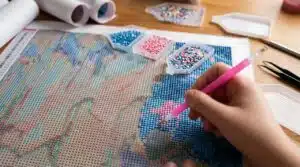
Did you know you can paint without using any paint? Yes, you can craft any painting design without using a single paint. That is literally what yarn painting is all about: painting by using yarn.
Whether you want to make some fun or you’re interested in creating projects, yarn painting is easy to learn for beginners.
In this guide, you’ll discover what yarn painting is, where it originated, and how you can make your DIY yarn painting.
What is Yarn Painting?
Yarn painting is people use different colored yarn to make pictures and designs. Its source can be traced to the Huichol culture, a traditional craft created by Wixárika (Huichol) people of Mexico.
Today, yarn painting is a popular DIY craft that everybody wants to do to express their creativity.
Why is Yarn Painting So Popular?
Different people in the world are now using yarn to paint. The question is why? Here are some of the reasons:
- Many users love yarn painting because it helps them develop their creative abilities.
- It also improves hand-eye coordination and strengthens fine motor skills.
- Most people use it because it’s a perfect craft for relieving stress.
- Some users use it for fun withtheir family and friends.
- Several academic institutions use it as an educational classroom project for kids.
- Most importantly, users who want to improve their concentration level find fun in doing yarn painting.
Different Types of Yarn Painting
There are different types of yarn painting, and the most common ones are stated below:
1. Traditional Huichol Yarn Painting
This traditional style comes from the Wixarika (Huichol) people of Mexico. The process involves pressing colored yarn into a layer of beeswax on a wooden board to create different designs.
2. Glue-Based Yarn Painting
This is the most common and most practiced yarn painting, which is mostly recommended for beginners. Users will just have to glue yarn onto cardboard, canvas, or any materials of their choice to make their designs.
3. Sticky Surface Yarn Painting
Unlike glue yarn painting, which uses glue, this method uses sticky paper or adhesive sheets to hold the yarn in place. It is easy to use. In fact, some users prefer sticky surface yarn painting because it’s easy to use.
4. Mixed Media Yarn Painting
This involves using yarn with other craft materials like paint, beads, fabric, or paper, giving room for artists to express their creativity and produce textured yarn art.
Common Materials to Use
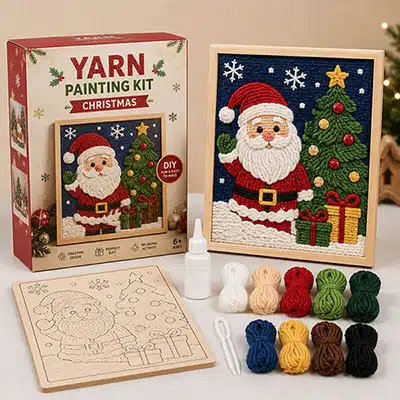
You will need the following materials if you want to get started with DIY yarn painting.
- Yarn
- Cardboard, canvas, or wooden board
- Craft glue or white glue
- Scissors
- Pencils
- Protective work surface
Step-by-Step Guide to DIY Yarn Painting
Yarn painting is not always hard; all you have to do is follow the steps below and see how well you can design:
Step 1: Pick A Design:
The first thing to do is to select a simple design. It can be a flower, animal, heart, or any pattern. If you’re a beginner, don’t start with complex designs.
Step 2: Draw Your Outline
Now, the next thing to do is to gently use a pencil on the design on the surface you’re using. It can be on cardboard, canvas, or a wooden board, depending on your choice and what’s available.
Step 3: Select Your Yarn Colors
Make sure the colors you will be selecting match your designs.
Step 4: Apply the Glue
Don’t pour all the glue at once, so it won’t look messy. Instead, just apply a small amount of glue on a small section and follow through as you lay your yarn.
Step 5: Set the Yarn
After placing the glue on the outline, you can then carefully lay the yarn. Make sure you press it down to keep it in place.
Step 6: Allow It to Dry
Make sure you give your yarn painting enough time to dry after you’re done. Don’t touch it until you’re sure the glue is set.
Step 7: Start Using It
Now, you can use your artwork for any intended purposes. You may want to frame it and hang it on a wall or send it as a gift to family and friends.
Basic Tips to Follow:
As a beginner who is just starting DIY yarn painting, you just have to follow the following tips to become better:
- Start with Simple Designs:You don’t have to start with complex designs. You can begin your yarn art journey with easy patterns to build confidence and improve your skills.
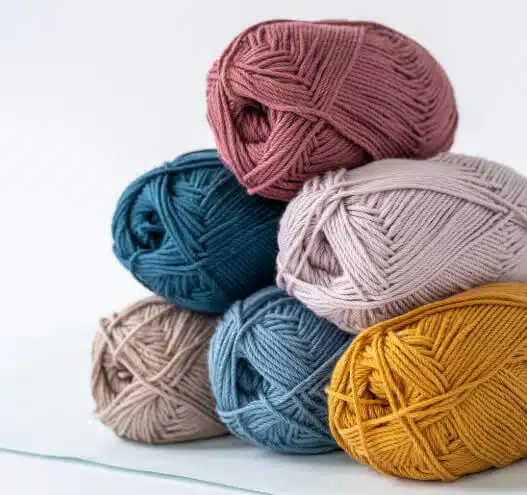
- Use Thicker Yarn:Thicker yarn is always easier to handle and place compared to thinner yarn. And, as a beginner, starting with thicker yarn would be the best option for you.
- Avoid Using Too Much Glue:Applying a thin, even layer of glue to keep the yarn in place is enough. Too much glue can make the artwork look messy and increase drying time.
- Be Patient While Positioning the Yarn:When it comes to yarn painting art, patience is very important. Make sure you’re patient enough to notice every detail, and don’t force the yarn while laying it on the outline. Just take your time to get the artwork done.
Yarn Painting Ideas
Below are some common yarn painting ideas you can try out:
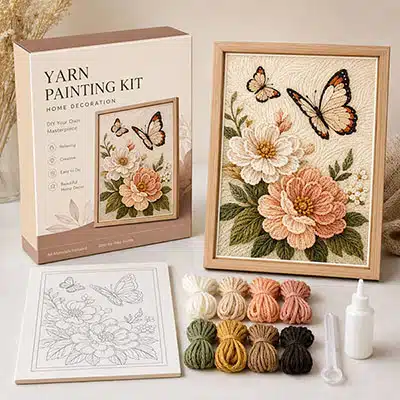
- Animals (birds, butterflies, cats, dogs, fish, etc.)
- Flowers
- Landscapes
- Geometric shapes
- Hearts
- Seasonal decorations (Christmas tree, Halloween, Easter, etc.)
- Fruits
- Mountains and sunset
- Cartoon characters and more
Common Mistakes to Avoid
These are the common mistakes to avoid if you want to create a cleaner and more attractive yarn painting:
- Using Too Much Glue
- The majority of people don’t realize that using excess glue can spread beyond the design and make their finished artwork untidy. While using enough glue is necessary, too much of it is the problem.
- Not Allowing the Glue to Dry
- Some people are always in a rush to push or move their yarn while it’s yet to dry properly. Don’t do that. Always allow your artwork to dry properly before doing anything with it.
- Leaving Gaps Between Yarn Strands
- Importantly, make sure there is no gap left between the yarn strands so your artwork will be eye-appealing and presentable.
FAQs
- Is Yarn Painting Suitable for Beginners?
Absolutely, yarn painting is not hard to learn, and it’s suitable for any beginner who is interested in learning. Just follow the guidelines given.
- What Type of Yarn Works Best?
Most people always recommend medium-weight yarn as the best because it is easy to handle and it comes with a wide variety of colors. But we will recommend a thicker yarn for beginners.
- Can Children Do Yarn Painting?
Yes, yarn painting is not only fun but also educational for children. Although we always recommend that adults supervise them on most occasions, especially when they’re using scissors or glue.
- What Surface Should I Use?
This depends on what you want to use your yarn painting for, but there are various commonly used surfaces, including cardboard, canvas, wood, or thick paper. What matters is that you have to make sure the surface is sturdy and can hold the yarn and glue without bending or tearing.
- How Long Does A Yarn Painting Take to Complete?
The time depends on the size and complexity of the design. Simple projects may take less than an hour, while more detailed artworks can take several hours or even a few days.
- What Type of Glue is Used to Make Yarn Art?
White craft glue or PVA glue is the most commonly used yarn art glue because it dries clear and holds the yarn firmly in place. Although you can also use tacky glue for a stronger bond, especially if you’re working on wood or any canvas surfaces.
- What’s the Difference Between Yarn Painting and String Art?
Although both crafts use string-like materials, they are created differently. Yarn painting uses glue to attach yarn to a flat surface, while string art involves wrapping string around nails fixed into a wooden board to form a design.
Conclusion
Yarn painting will always be a simple and rewarding craft anyone can enjoy. With just a few materials and little creativity, you can create unique yarn art for home décor or gifts.
You may be an experienced crafter or a beginner, but the fun of exploring DIY yarn painting remains the same.
If you’re ready to start your next creative project, you can explore the wide range of high-quality craft kits and supplies available at Jabay Games.
Jabay Games has everything you need to bring your creative ideas to life.