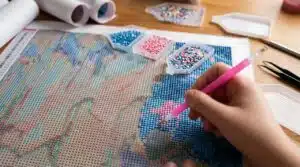
Cross stitching is an outstanding needlework that is mostly practiced by people of all ages and abilities. It’s highly recommended for people who are looking for a relaxing and enjoyable artwork experience.
Undeniably, cross-stitching contributes to the holistic development of users, encompassing motor skills development, concentration enhancement, self-achievement, and creative thinking.
Now, if you are wondering how to to start cross stitch, you only need to prepare basic supplies mentioned in our article below.In this guide, we’ve combined everything you need to know, starting from choosing supplies, completing your first stitch, and building substantial confidence. Most new beginners can learn the basic cross stitch within 1 hour.
What is Cross Stitching?
Cross stitching is when people stitch in a cross style, often called X-shaped stitches. It involves using an even weave fabric (like Aida) to form a design or picture by making rows of “X”s. The pattern acts like a grid and is similar to pixel art, making it a very simple process to follow, even for beginners.
Why You Need Cross Stitch as a Hobby?
Cross stitching usually is not for child’s play. Below are some of the reasons you could consider cross-stitch as a hobby:
- Reduce Stress
Cross-stitch is a better way to relax your mind from stress and stay focused after a tight schedule. It makes you stay calm and escape overthinking and worries.
- EncouragesCreativity
It enhances creativity by allowing you to choose the colors of your choice and make something good out of it, giving you the room to express your personality.
- Easy to Learn for all ages
Cross-stitch isn’t an activity that will stress or bore you,so you can easily learn the process and enjoy the stitching without stress.
- Affordable to try
Cross-stitch is not expensive; so you can easily get one with all the necessary equipment.
Essential Cross Stitch Supplies Check list for Beginners
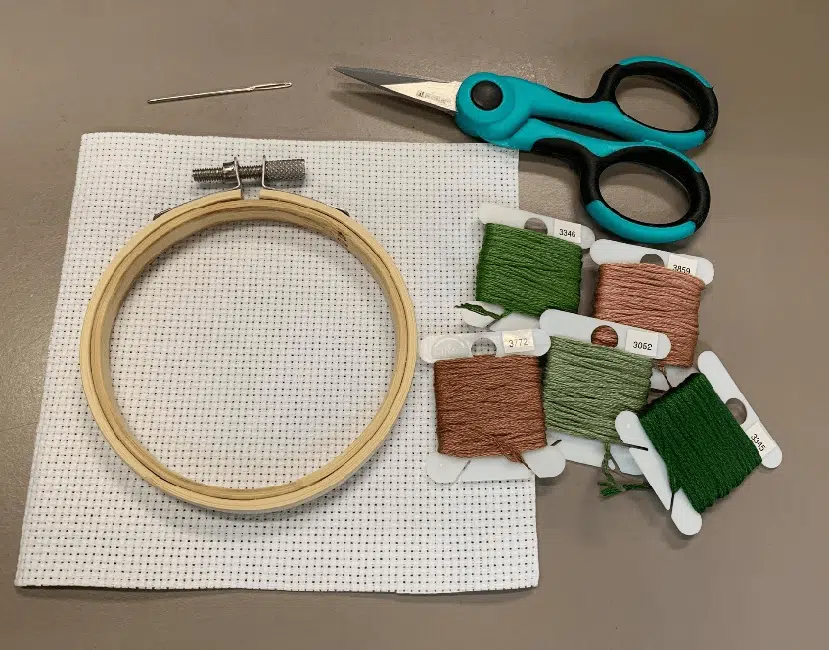
To start cross-stitch, you don’t need more. All you need is to start with some basic equipment below:
- Fabric
The most common white or cream Aida fabric is OK for beginners, which is the foundational material for your design started. They can see the holes very well. Also, for the visibility of the holes and a seamless stitching experience, 11-count, 14-count, or 16-count is recommended.
- Embroidery Floss
Embroidery floss, also known as stranded cotton, is a versatile thread made of six strands twisted together. There are various color to choose, only 2 of the strands at a time is suggested.
- Needles
Tapestry needles are recommended because they have a blunt tip and a large eye. The common beginner sizes are 24 or 26.
- Embroidery Hoop
An plastic embroidery hoop helps to hold fabric tightly while stitching for the work to be neat, comfortable, and perfect. A 4-6-inch hoop is suggested for new beginners.
- Scissors
Small and sharp scissors are needed to cut thread and make the design look neat.
- Pattern
Patterns or chart are the first step for you to choose, as a new beginner, you should choose a simple pattern with colors and large symbols. It usually takes several minutes to look before proceeding.
Understanding A Cross Stitch Pattern
A cross-stitch pattern is a chart made up of a grid represented in the form of a graph, showing each square as one stitch. It has symbols with each symbol associated with color names and number codes, so you can use the right colors. Also, there is a color key that tells you which floss matches each symbol.
Beyond that, patterns also show the finished size, recommended fabric type and count, and the number of strands to use. The graph in the pattern is often marked in groups of 10 for you to easily count the number of stitches. And, it’s recommended that you start from the center and work outward as a beginner.
How to Prepare Your Fabric
Before you start using your fabric, these are the tips you should pay attention to:
- Iron your Aida fabric to keep everything nice and smooth. Don’t let the iron get too hot.
- You shouldn’t fold the fabric when you want to take a break.
- You can add masking tape to the edge of the fabric to prevent it from fraying. Don’t add too many tapes.
- Make sure you secure the fabric in your embroidery hoop.
- You’re expected to find the center of the fabric before starting to stitch.
How to Thread Your Needle
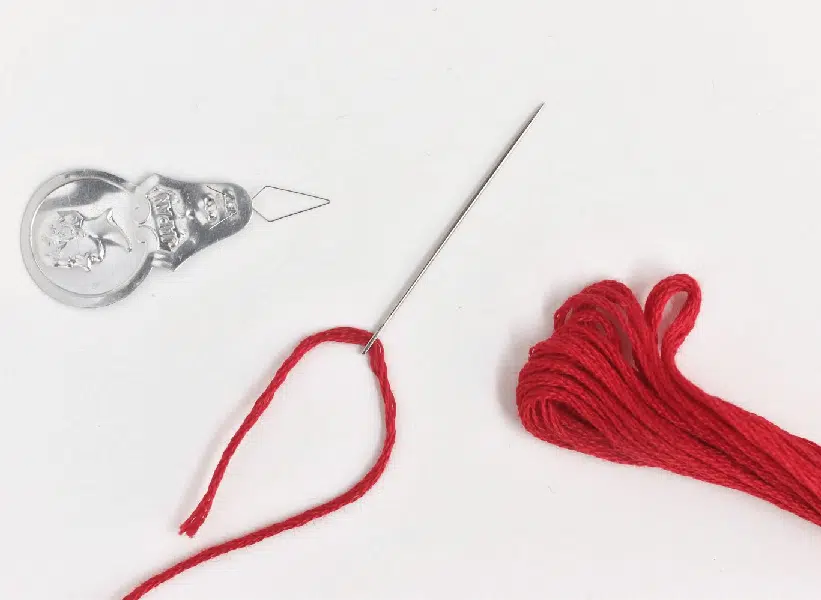
For beginners,the basic step is how to thread your needle:
- Cut about 18 inches of floss or use your fingertips to elbow as a measurement.
- Gently separate the strands of the whole. You can pick two strands out of six.
- Slip one end through the eye of the needle.
- You might not need to knot the end of the thread.
- Don’t use a very thick needle that can stretch the holes as you stitch.
How to Make A Cross Stitch (Step-by-Step)
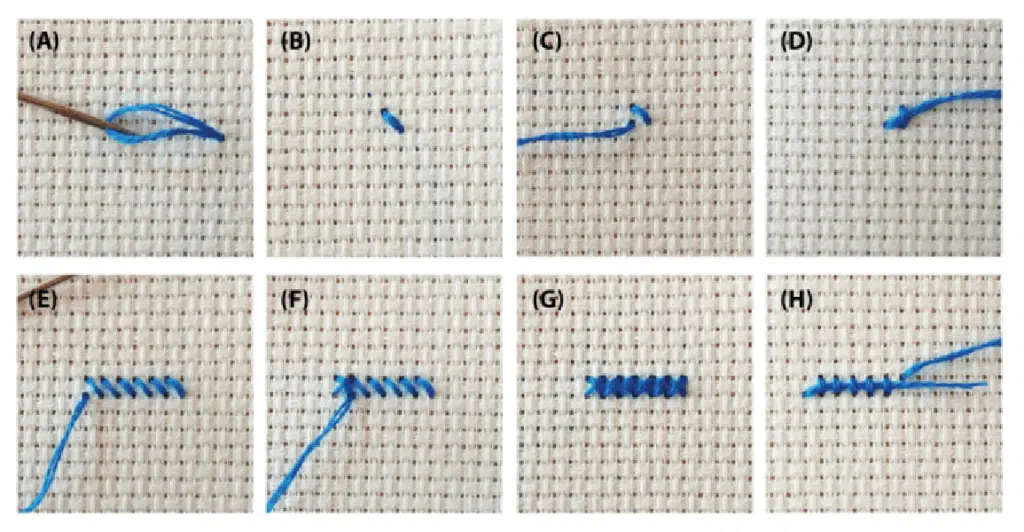
Each cross stitch is made of two diagonal stitches:
1: Bring the needle up from the back at the bottom left
2: Go down at the top right
3: Bring the needle up at the bottom right
4: Go down at the top left
Importantly, make sure you stitch crosses in the same direction for a near finish and don’t force it.
How to Start and End Your Thread (No Knots)
Starting
- Do not knot the end of the thread, just leave a short tail at the back and stitch over it.
Ending
- Make sure you slide the needle under 3-4 stitches at the back.
- Trim excess thread to keep your work flat and professional.

Top Beginner Tips for Success
- Start with simple and small designs to avoid complexity.
- Don’t use bad lighting to prevent eye strain.
- Make sure you take breaks regularly.
- Don’t pull stitches too tight.
- Make sure you make the count multiple times before stitching.
- Clean your hands before stitching.
Common Beginner Mistakes to Avoid
- Starting close to the edge instead of starting from the center.
- Using too many strands of floss.
- Puling thread too tight.
- Not keeping stitches in the same direction.
- Starting with a complex pattern instead of a simple pattern.
- Not separating strands.
What Can You Make with Cross Stitch?
Some of the major things you can use cross stitch for include:
- Wall art
- Framed quote
- Gifts
- Bookmarks
- Cushion covers
- Decorative hoops
- Key holders
FAQs
- Where should I start my cross stitch?
You can start stitching in the center of the fabric, not from the edge. You can easily detect the center of the fabric by folding it in half lengthways and widthways.
- Can children learn cross-stitching?
Yes, children can learn cross stitching, starting from age 7 or 8 upward. However, they have to be properly monitored for safety reasons.
- Should I wash my cross stitch when finished?
Yes, you can wash your finished cross stitch with soap and water to remove oil, dirt, and any stains. But once you wash your hands before stitching, you might not have any reason to wash your stitches again.
- How long does it take to learn cross-stitch?
Cross-stitch is so easy to learn, within 30-60 minutes, you should be able to know how to do the rudiments. What’s more, you could start with small and simple projects before moving to complex ones.
Conclusion
Cross-stitch is an amazing, calming, and simple craft to learn. With just a few supplies and a pattern, you can create something beautiful and creative. All you have to do is to start small, enjoy the process, and don’t rush it.
A beginner kit usually includes pre-cut fabric, floss, needle, pattern, and instructions. You can get in contact with Jabay Games if you want more details about quality products.